











Eye
Ptosis Correction
Enhances slightly incomplete double eyelids into a more defined eye appearance!
- #Tired and sleepy-looking eyes?
- #Achieve a clearer, more defined eye appearance with 1mm ptosis correction
Before & After
1mm Plastic Surgery Ptosis Correction
-
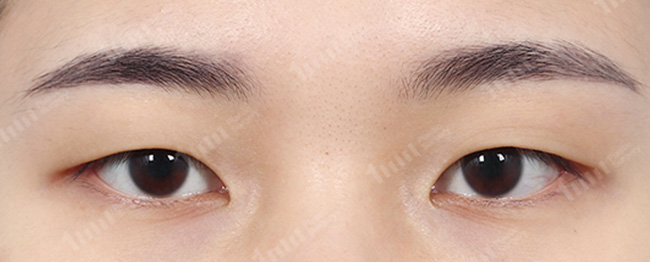
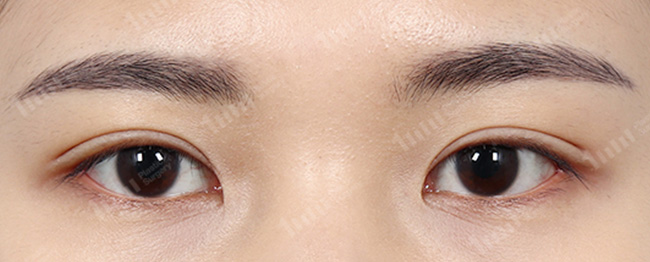
Natural Adhesion Double Eyelid Surgery, Ptosis Correction, Upper Blepharoplasty (3 months)
-
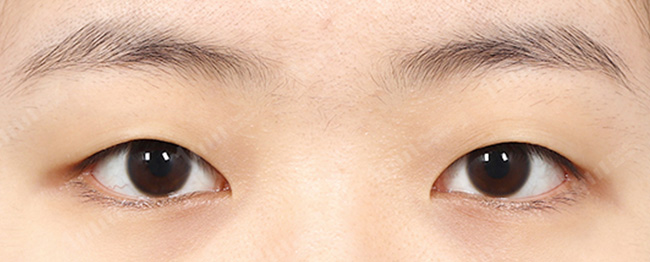
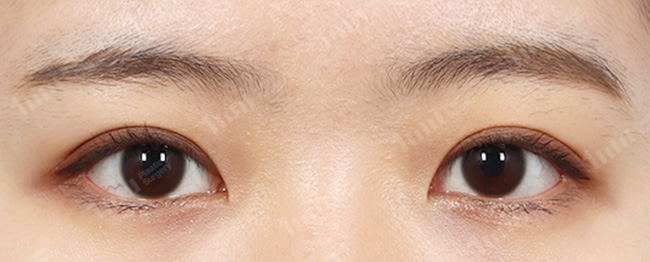
Natural Adhesion Double Eyelid Surgery, Ptosis Correction (3 months)
-
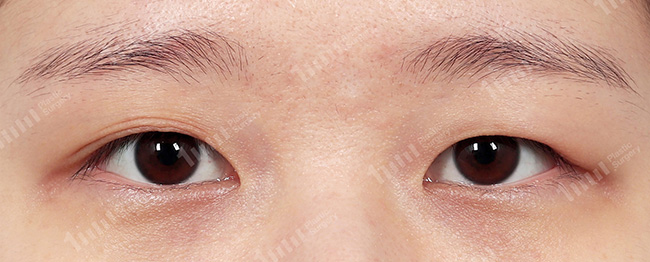
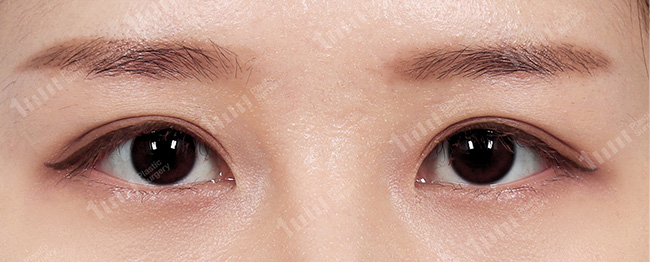
Incisional Ptosis Correction + Upper Blepharoplasty (7 months)
-
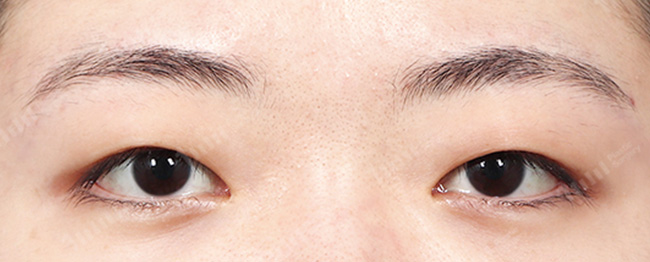
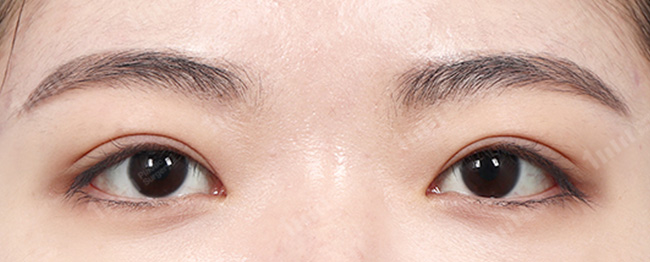
Natural Adhesion Double Eyelid Surgery, Ptosis Correction (3 months)
A small fee was paid for the before and after photos and the review.
Can I have double eyelid surgery only?
Is ptosis correction necessary?
Double eyelid surgery does more than create a crease; it improves iris exposure for a larger and more defined eye appearance. In ptosis cases, double eyelid surgery alone may lead to a loose crease or a tired-looking appearance if ptosis is not corrected.
Double eyelid surgery
Creates only a double eyelid line
Ptosis correction
Adjusts the eye-opening muscles to increase pupil exposure
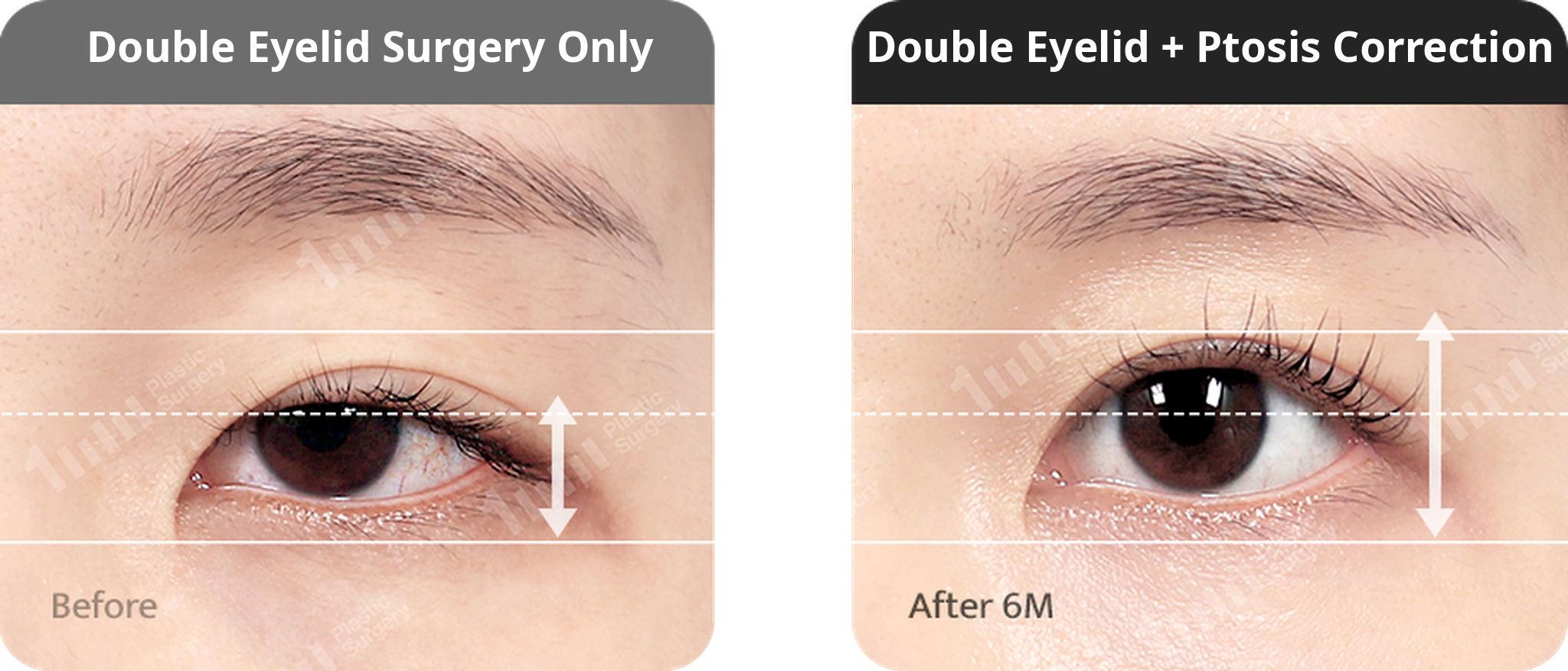 Double Eyelid Surgery Only
-
Double Eyelid + Ptosis Correction
- Adjusting iris exposure for a brighter, more defined look
- Creating eyes that appear refreshed and vibrant without looking tired
- Natural-looking results that don't appear overdone
A small fee was paid for the before and after photos and the review.
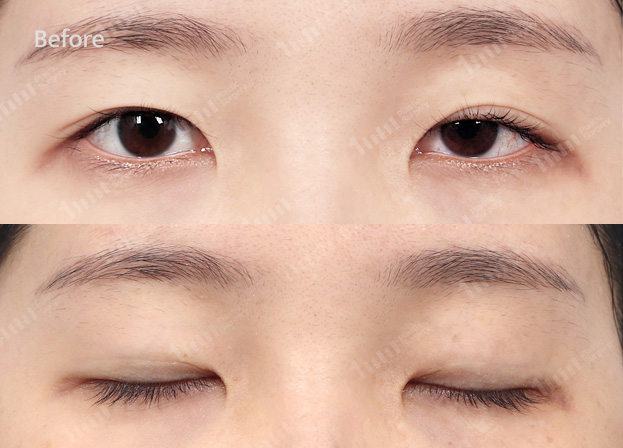 Before
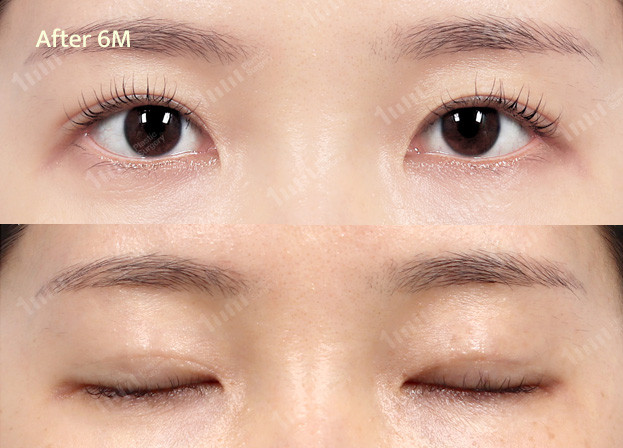 After 6M
Adjusting iris exposure can help create a more defined eye appearance.
A small fee was paid for the before and after photos and the review.
Features of 1mm Eyelid Correction

-
Considering individual
eye-opening strength
1:1 customized surgeryConsidering one’s eye muscles and fat amount
1:1 customized surgery to complete the ideal eye shape
-
With a surgical method
of only 1mm
Fast recovery possibleMinimizing tissue damage with minimal incision
Less swelling and scars, enabling fast recovery
-
Functional + aesthetic
improvement possibleImproves ptosis symptoms
Completes clear eye shape
-
Natural eye shape
Less scars with detailed suturing
Natural even when eyes are closed
Which Procedure Is Right for Your Eyes?
| Incision method | VS | Non-incision |
|---|---|---|
| Moderate to severe ptosis | Recommended for | Suitable for mild ptosis |
| Suitable for a wide range of cases | Suitable Candidates | Best suited for patients with thin eyelids |
| Allows for fat removal if needed | Fat | Fat removal is generally limited |
| Minor scarring may occur | Visible Scarring | Minimal visible scarring |

Who Is This Procedure For?
When Non-Incisional Ptosis Correction May Be Recommended
- Mild ptosis causing a tired or sleepy appearance
- Eyelid drooping is not severe
- Thin eyelids with little fat
- Little to no change following previous double eyelid surgery
Non-Incisional Ptosis Correction Procedure
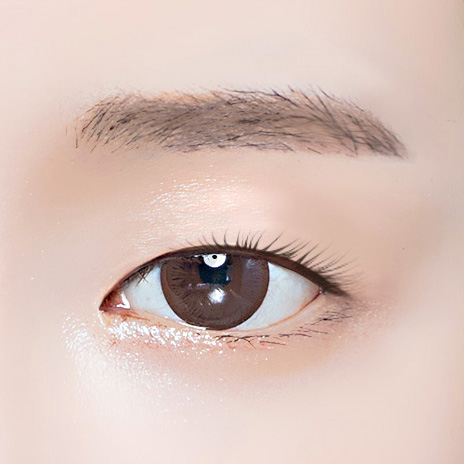
Step 01
Design the desired eye shape before surgery
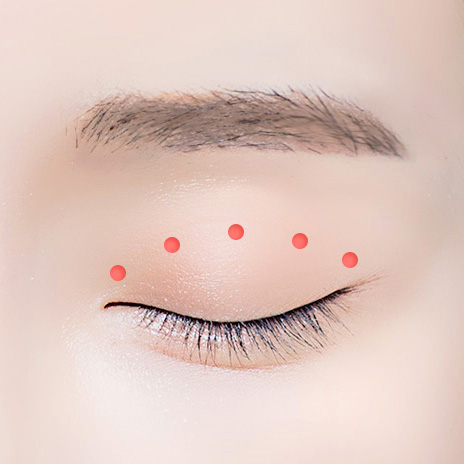
Step 02
Create fine holes along the planned design line
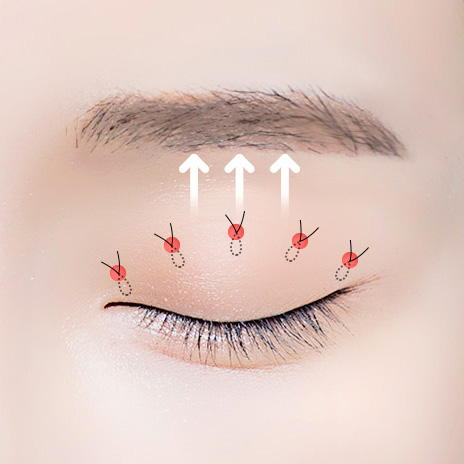
Step 03
Form secure fixation points to enhance eyelid-opening function and create the double eyelid crease
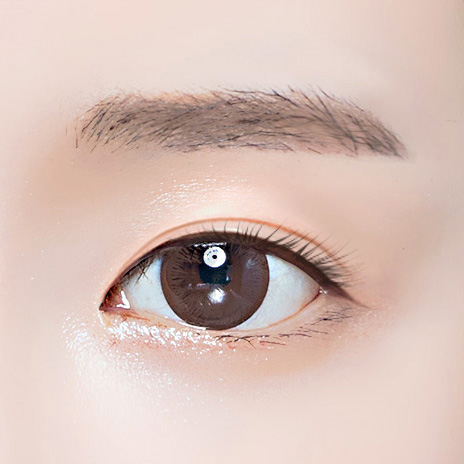
Step 04
Improve the appearance of droopy-looking eyes and achieve a natural-looking eye appearance

Who Is This Procedure For?
When Incisional Ptosis Correction May Be Recommended
- Thick eyelid skin with excess fat
- Moderate to severe ptosis
- Difficulty opening the eyes comfortably
- Frequent use of the forehead muscles due to weak eyelid-opening function
Incisional Ptosis Correction Procedure
Step 01
Design the desired eye shape before surgery
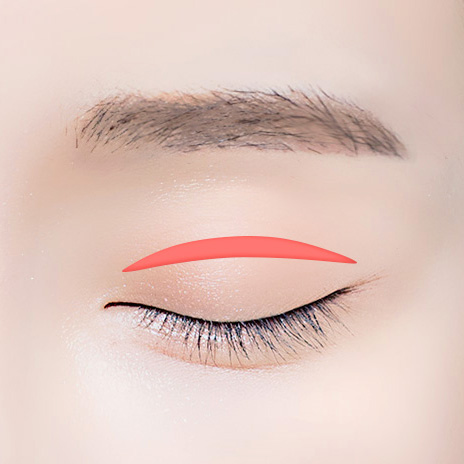
Step 02
Make an incision along the planned line and carefully dissect the underlying tissues
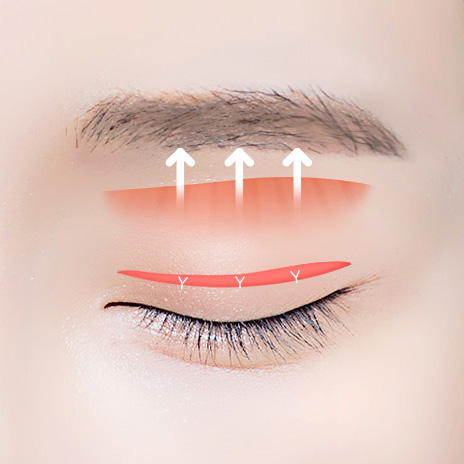
Step 03
Adjust the length of the eyelid-opening muscle by advancing and securing it
Step 04
Improve the appearance of droopy-looking eyes and create a more defined eye appearance
Q&A
Frequently Asked Questions
Q. Can I undergo ptosis correction after double eyelid surgery?
If eyelid-opening function remains insufficient after double eyelid surgery, ptosis correction can be performed without altering the existing double eyelid crease, helping to create a more defined eye appearance.
Q. Can ptosis correction be performed on only one eye?
Yes, ptosis correction can be performed on just one eye. However, if the other eye is not corrected, asymmetry may develop over time. For this reason, ptosis correction on both eyes is often recommended to help achieve better balance and symmetry.
Q. How do I know if I need ptosis correction?
The amount of iris exposure can provide an indication. In general, visible iris exposure of up to approximately 80% is considered within the normal range. When iris exposure is reduced below this level, the eyes may appear tired or sleepy, and ptosis correction may be considered. A more accurate assessment can be made through a thorough consultation with a surgeon.
Our specialty
Beauty, Refined Down to the Last Millimeter, 1mm Plastic Surgery
01 / 04

/ Trustworthy 1mm Plastic Surgery /
One-on-One Personalized Treatment Planning Based on Individual Features
/ Trustworthy 1mm Plastic Surgery /
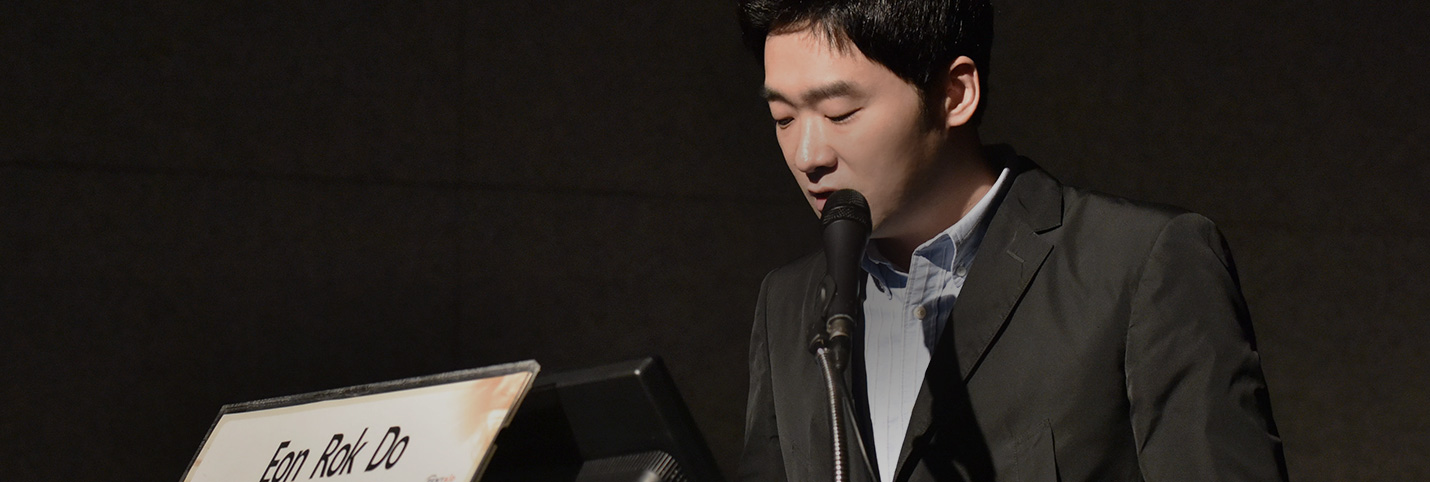
Continuous Academic Research and Professional Development for Optimal Outcomes

/ Trustworthy 1mm Plastic Surgery /
Strict Sterilization and Disinfection Protocols for Infection Prevention

/ Trustworthy 1mm Plastic Surgery /
Plastic surgeon, Korean Society of Plastic Surgeons